Jobsite tool theft: how to prevent it and what to do after a theft
Identify tools, protect trailers, prepare your evidence and respond in the first hours: a guide to tool theft on construction sites.
- Author
- Allokit
- Published
- Reading time
- 7 min
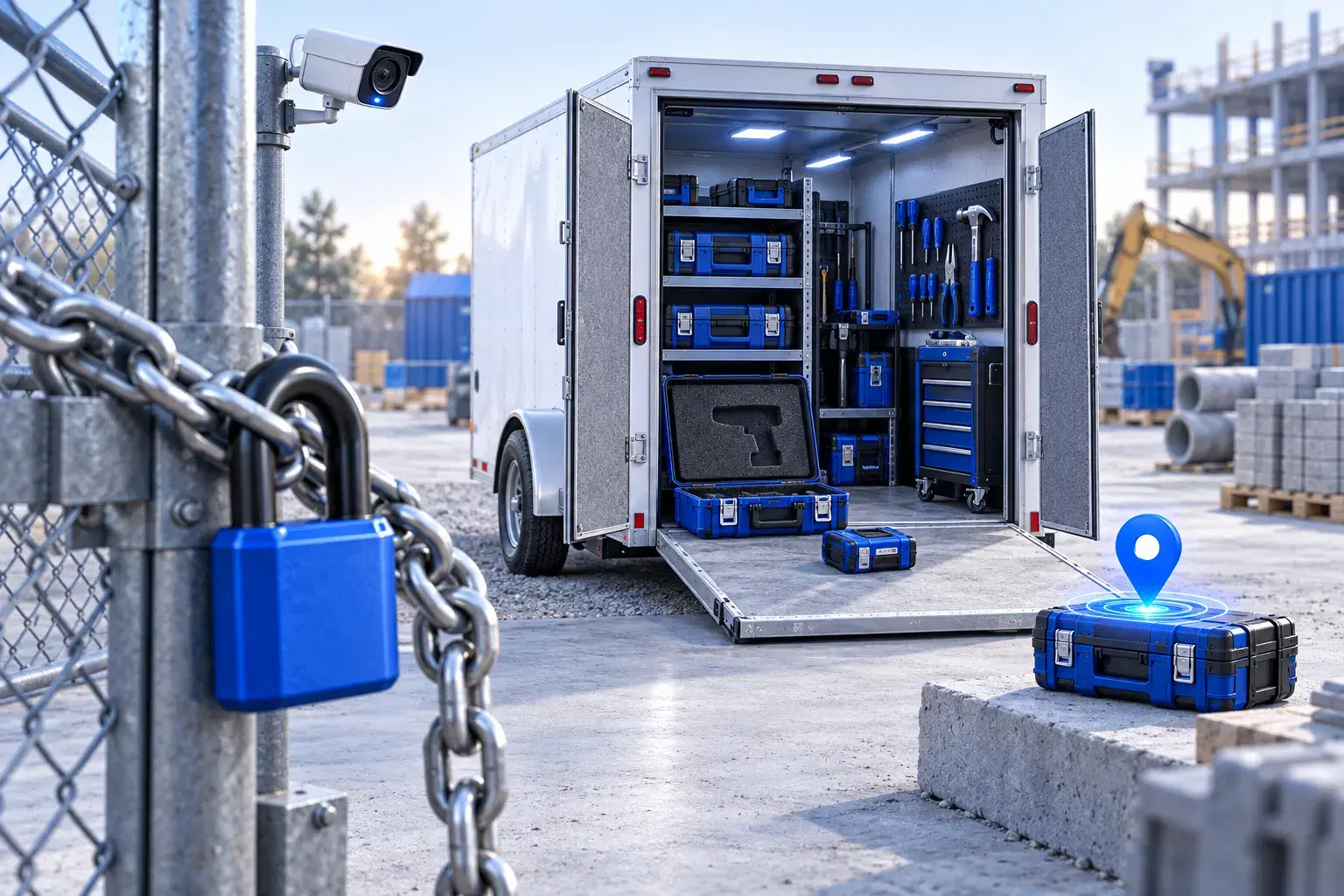
Limiting tool theft on a jobsite takes three things: make tools harder to take, easier to identify, and know right away what is missing. Most contractors only find out how much was stolen by looking for tools one by one, sometimes days later.
There is very little public data on tool and equipment theft from jobsites in Quebec, as the Portail Constructo points out. The recommendations below are therefore based on advice from the APCHQ and on inventory management practice.
What gets targeted, and why
Thieves look for what is easy to move and quick to resell:
- portable power tools and their batteries;
- generators and compressors;
- trailers, with or without their contents;
- small machinery;
- new materials left on site, such as plywood, copper or wire.
The risky times are well known: weekends, evenings and above all the construction holiday, when jobsites sit empty for two weeks.
Before a theft: make tools hard to take
Bring back whatever you can. A tool stored at the warehouse will not be stolen from the jobsite. At the end of the day, decide what stays and what comes back.
Empty trailers when the site is closed. The APCHQ advises emptying them, leaving the doors open to show there is nothing to take, and storing them in a closed area.
Light the site. Thieves prefer the dark.
Avoid materials that sit waiting. According to the APCHQ, ten or so sheets of plywood are enough to attract a thief. Have materials delivered as close to installation as possible.
Immobilize machinery. Keys removed, anti-start devices, equipment parked in a visible spot or blocked by another vehicle.
Before a theft: make tools easy to identify
This is the step people neglect most, and the one that matters most after a theft. Without a serial number or a photo, the police cannot link a recovered tool to your company.
- Record the serial number of every valuable tool, in a register kept somewhere other than the jobsite.
- Take a photo of the tool and its rating plate.
- Add permanent marking. The APCHQ recommends clear engraving with the owner's name rather than a sticker, which comes off in seconds.
- Keep the invoice or proof of purchase with the register.
A QR code on the tool links the physical object to its record: serial number, photo, person responsible, history. It does not replace engraving, but it makes the register usable every day, not just on the day of a theft.
Know right away what is missing
A theft found on Monday morning is often a theft that happened Friday night. The longer the delay, the farther away the tool.
Keep an up-to-date inventory per jobsite. Who has what, and where. If the inventory is only updated twice a year, it will not tell you what disappeared yesterday.
Walk the site at closing and opening on high-risk jobsites, with the list in hand.
Use automatic detection for assets that move around. A Bluetooth tracker is detected near a compatible gateway, for example in a truck. It helps you see that a tool did not come back.
Equip the assets that are left alone. A GPS tracker for tools and trailers reports its own position, depending on its power supply and coverage. To decide what goes on which tool, see QR code, Bluetooth or GPS.
To be clear: location does not prevent theft and does not guarantee recovery. It shortens the time before you notice something is missing and gives the police one more piece of information.
After a theft: the first hours
- Stay safe. If the break-in is recent or in progress, stay away and call 911.
- Touch nothing before the police arrive, if possible. Photograph the scene, forced entry points and any traces.
- File a police report and provide the list of missing tools with their serial numbers, photos and invoices. Write down the file number.
- If an asset has a GPS tracker, give its last position to the police. Do not go and get it yourself.
- Notify your insurer quickly, with the police file number and the detailed list.
- Take a full inventory of what is left. Thefts are often discovered in stages.
After a theft: the following weeks
Watch resale sites. The APCHQ advises caution when buying used equipment, especially after the construction holiday, because stolen goods often resurface on the resale market. If you recognize one of your tools, pass the listing to the police.
Replace with care. Before buying everything again, check what is truly essential. It is also a good time to revisit the buy or rent decision for some equipment.
Fix the weak spot. Trailer left full? Site not lit? Tools not marked? A theft is expensive information; you might as well use it.
The one-page checklist
| When | What to do |
|---|---|
| Buying a tool | Serial number, photo, invoice, engraving, label |
| Every day | Decide what stays and what comes back |
| Weekends and holidays | Empty trailers, lit site, immobilized machinery |
| Opening the jobsite | Walkthrough with the inventory list |
| After a theft | Police, insurer, list with serial numbers, watch resale sites |
Allokit brings together the inventory, serial numbers, people responsible and last known position of your tools, machinery and vehicles. See how it works or let's talk about your jobsites.